The Extraction
Mistaking access for care, and surveillance for intimacy

Case File: The Extraction
Incident Date: January 2026
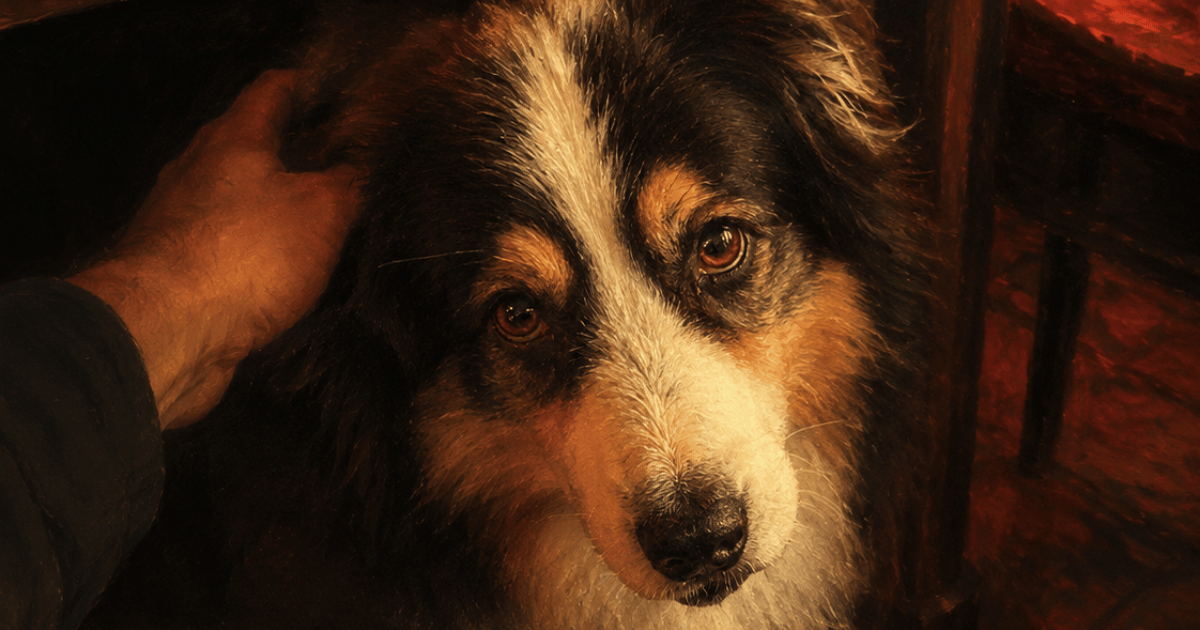
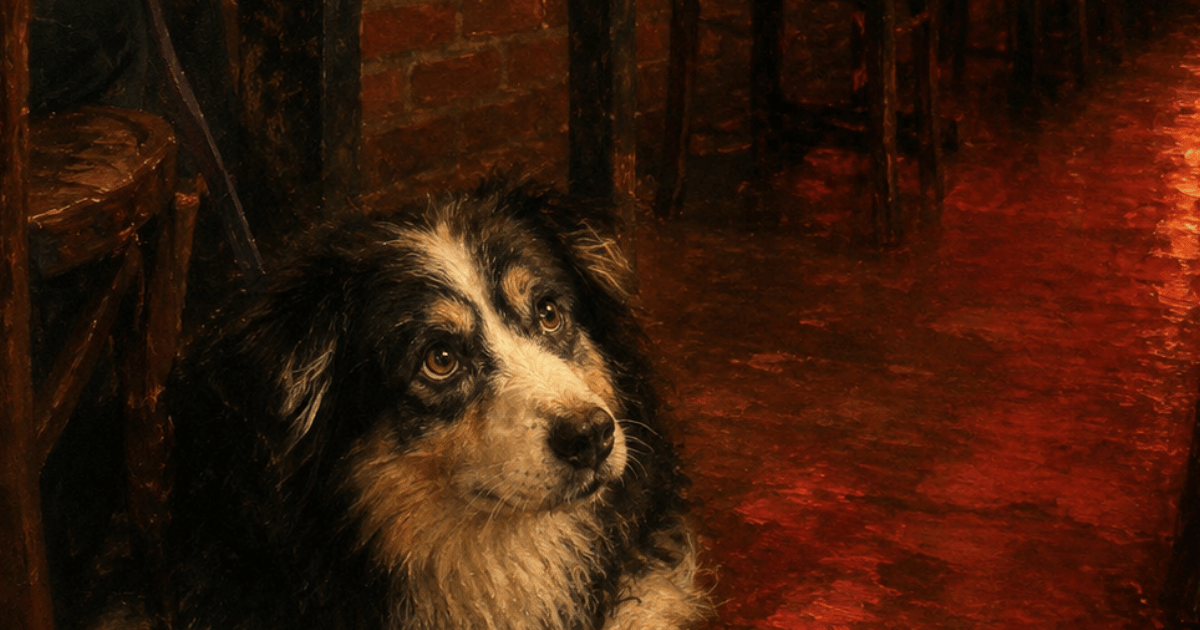
AAA was supposed to be an escape for that moment in time. A loud, unassuming pub where ambient noise could drown out the static in my nervous system. Under the small, sticky wooden table, the warm weight of my dog, Drake, pressed against my boots—my last clean tether to a world that had not completely collapsed. Across from me sat a man who had recently positioned himself as my helper. At that point, I still thought I was meeting someone who wanted to steady me. I didn’t yet understand that there are people who can sit across from your unraveling and see, not a person in pain, but an opening.
A few weeks earlier, when my life was in freefall, he had bypassed my boundaries around money and wired it directly into my account. I had said no. More than once. I had tried to explain that financial dependence was not a neutral subject for me, that money had never felt simple, clean, or free of emotional consequence. He brushed all of that aside with the confidence of someone casting himself in a role he deeply wanted to play. There are no strings attached, he insisted. But the thing I would eventually learn is that the most dangerous forms of control do not announce themselves as control. They arrive as generosity. As relief. As exactly the thing your body is too exhausted to refuse.
By then, I was a queer, neurodivergent man stepping back into independent adult life for the first time after a fifteen-year relationship had ended. I had just moved into my own place. I had just lost my job. And then came the stalking campaign: strangers sent to my building, my own sexual images turned into bait, my buzzer shut off, my sense of safety burned down to the studs. My nervous system was running on iced flat whites, ADHD overdrive, and pure gay panic. So when someone appeared offering support—material, immediate, impossible to misread—I wanted to believe it was help. I wanted, more than I probably understood at the time, for one thing in that season of my life to arrive without teeth.
Part of why that kind of help worked on me is that I was raised in a house where love and money had long been confused for each other. My parents did not say “I love you.” Not to me, anyway. In my family, money often functioned as proof, reassurance, leverage, apology, and control all at once. It stood in for emotional presence so often that, by adulthood, I had developed a deeply warped relationship to being helped: I craved support, distrusted it, and felt guilty the second it arrived. Vulnerability itself was not especially welcome in the house where I grew up. If you were hurt, you were dramatic. If you needed comfort, you were needy. If you had big feelings, you were a problem to be managed. So when someone offered me care in a form that looked tangible and immediate, I was primed to read it as safety even while some older part of me was already bracing for the bill.
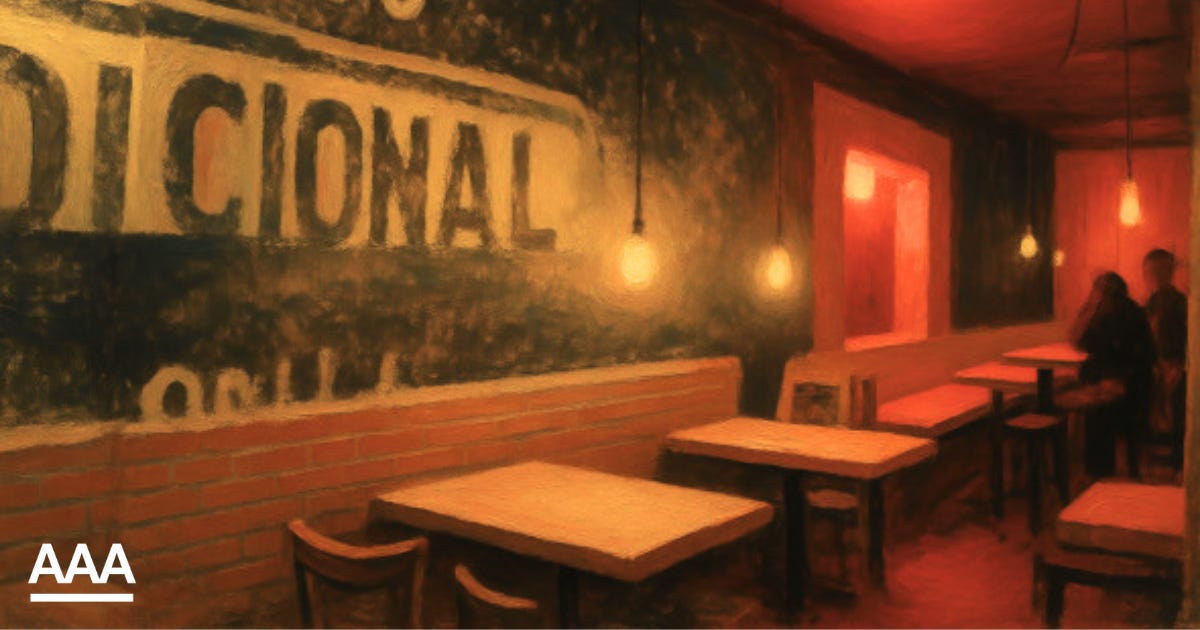
At AAA, the conversation began to turn before I had the language for what was happening. He started dropping little distortions into the room with unnerving calm—statements about my recent trauma, my choices, my actions toward him that were not just unfair but demonstrably false. I responded the way I often do when reality starts slipping: I got precise. I opened my veins and bled out facts. Timelines. Context. Receipts. I genuinely believed we were navigating some brutal miscommunication and that if I could just explain it clearly enough, he would meet me in the truth. Instead, the more accurately I spoke, the flatter he became. Every correction seemed to drain something human out of his face. I was treating the exchange like a mutual search for clarity. He was treating it like a perimeter test.
Then came the grievance that clarified the scale of the distortion. He looked me in the eye and demanded that I carry guilt for missing his annual White Party back in the summer. He claimed my absence had sent him into such a dark depression that he didn’t know what might have happened if a friend had not stepped in to get him through it. The disproportion was almost surreal. My life had been detonating in real time — a fifteen-year relationship collapsing, a job gone, strangers sent to my door, my body running on fumes — and he wanted emotional reparations for a missed party. Not because the party mattered, but because his ego did. He expected me to coddle his disappointment as if it belonged in the same moral universe as my actual survival. That was the moment the room began to feel airless. Not because I understood everything yet, but because some part of me had started to realize that we were not having the same conversation at all.
Before I could fully articulate what was wrong, my body had already started answering for me. I reached under the table and dug my fingers into Drake’s fur, grounding myself in the one thing in that room that still felt unquestionably real. The asymmetry of the exchange had become suffocating. I was trying to clarify. He was trying to reposition. I was trying to keep reality intact. He was quietly testing how much of it I would surrender just to make the conversation survivable. Long before my conscious mind was willing to name the danger, my nervous system had already started clocking it: the unsolicited money, the forced proximity, the casual erasure of my truth. That particular kind of dread does not arrive like a thought. It arrives like pressure in the lungs.
And when rewriting reality didn’t break me, he changed tactics. The generous benefactor did not disappear so much as get replaced by another role entirely: the wounded friend. His shoulders slumped just slightly. His voice softened into a performance of injured sincerity. He told me it seemed like I didn’t genuinely enjoy spending time with him. The audacity of the statement was almost enough to make me laugh, if I hadn’t been so exhausted. I was barely surviving. I was sitting across from him in a dog-friendly pub trying not to psychologically leave my own body, and somehow I was now being asked to manage his bruised ego. Then he twisted the knife further. He complained about the way I hadn’t prioritized him, the way I used to drop everything for other people, the way he had not been granted the same immediate access to my life. It was a masterclass in emotional asymmetry: I was in active collapse, and he was pouting over his placement on my call log.
The reason that tactic worked on me was simple enough, even if it took me years to name it. I did not see a man testing the perimeter of my sanity. I saw a friend I was disappointing. And once that frame locked in, my survival reflex took over. I did what I have done too many times in rooms that were already turning against me: I escalated honesty. I pushed harder toward clarity. I started trying to explain my pain so precisely that it might buy me grace. I thought that if I handed him the rawest parts of my interior, he would finally understand that my distance was not rejection. I did not yet understand that some people hear confession not as intimacy, but as access.
So I opened the vault. I leaned forward over the chatter of the pub and started handing him the least protected parts of myself. I told him I could not bear the feeling of failing another person right then. I told him the distance he was reading as indifference was actually the shape of my own collapse. And then I reached for the memory that, even now, still feels dangerous to say out loud. A few years earlier, at a Christmas party—the first one I had made it home for after the pandemic—I had been with my cousins when a casual conversation cracked open into something much more honest. I started crying. Then sobbing. I told them I didn’t understand why I hated myself so much. I told them I was terrified that the ugliest way I saw myself was probably the way everyone else saw me too. Sitting across from him at AAA, I offered that memory the way people offer up proof in desperation: not because it is safe, but because they hope it will finally make the truth undeniable.
He stared at me with a flat, unblinking vacancy and asked, “But why do you hate yourself?”
The question did not land like concern. It landed like a blade. Not because it was loud, but because it was so surgically empty. And then came the silence. Absolute. Heavy. Engineered. It sat there between us like a vacuum designed to force me to fill it, and I did. I started listing my flaws. My insecurities. The reactions I hated in myself. The things that made me feel broken, excessive, humiliatingly difficult to love. He did not interrupt. He did not comfort. He just sat there and took it in. That was the moment the shape of the encounter changed completely for me. I could feel, with a kind of cold horror that started at the back of my neck, that he was not receiving my pain as something to protect. He was absorbing it as information. Inventory. Leverage. There was no shared humanity in the silence, only the sickening realization that I had mistaken access for care.
I had spent much of my life believing that if someone wanted the truth from me, it meant they wanted me. That if they asked the intimate question, if they held eye contact, if they stayed in the room while I unraveled, some meaningful form of connection was taking place. But wanting access to someone’s interior is not the same thing as wanting to care for it. Some people respond to vulnerability with tenderness. Others respond to it like they’ve just been handed a map. The most dangerous forms of control do not arrive as threats. They arrive as help, offered in exactly the shape you’re least equipped to refuse, and they deepen through intimacy that is really just surveillance with better manners.
My body moved before my mind finished the sentence. I pushed my chair back so abruptly that the wooden legs scraped against the floor with a screech that made a few people glance over. “I need a minute,” I muttered, though my voice sounded strange to me, hollowed out and remote. He didn’t protest. He didn’t reach out. He didn’t ask if I was okay. He simply leaned back into the booth, his posture relaxing again into that expansive, satisfied calm, as if part of his work for the evening had now been completed. I reached under the table for Drake’s leash with trembling fingers. The solid weight of him was the only thing keeping me attached to the earth as I stood up and walked away from the gravitational pull of that booth.
By the time I reached the dim hallway near the restroom, I still did not have the full picture. I did not yet understand the scale of what I was inside, or the extent to which the man who had forced financial help on me had also positioned himself to benefit from my dependence. But my nervous system had already translated the warning my brain was still resisting. The forced generosity. The casual rewriting of my history. The dead, flat silence after I handed him the most fragile thing I had. I had mistaken containment for care. I had mistaken being studied for being supported. Standing there alone in the hallway, trying to regulate my breathing while the noise of the pub carried on as if nothing had happened, I realized that the terror of the encounter was not only that he wanted something from me. It was that he wanted it in a form I had been trained, almost all my life, to hand over.
What made the moment so destabilizing was not just that I felt manipulated. It was that I suddenly understood how familiar the mechanism was. Help had arrived in the exact form I had been trained to respond to: immediate, material, slightly overriding, impossible to refuse without looking ungrateful or unstable. It did not matter that some part of me had been uneasy from the start. My body learned long before my mind did that care could come braided with leverage, and that the price of receiving it was often some softer, more humiliating surrender. At that table, the old equation came back online in real time: accept the relief, then absorb the cost.
I would eventually understand more about him, and more about the architecture surrounding that period of my life, than I did in the hallway outside the restroom that night. But the deepest truth of the encounter did not arrive through investigation. It arrived in my body first. In the pressure in my lungs. In the way my hand clamped down on Drake’s leash. In the sickening clarity of realizing that the person across from me had not been moved by my pain, only sharpened by it. Some people hear your worst confession and move closer. Some hear it and start calculating.
That was the part I couldn’t unknow once I felt it. He was not keeping me afloat. He was building the tank.